
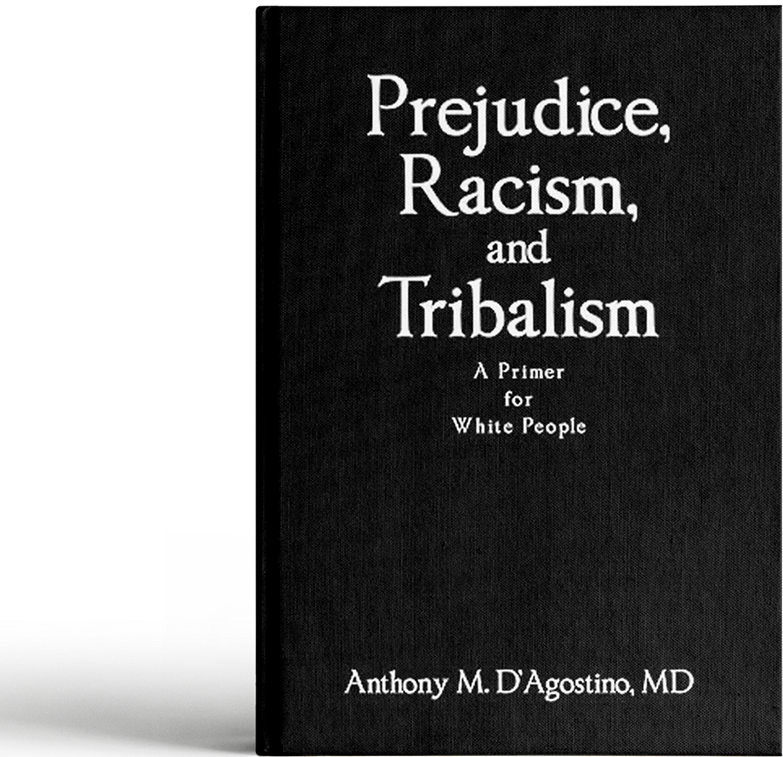
Prejudice, Racism, and Tribalism is a thoughtful primer designed to explore where bias begins and how it shapes our world.
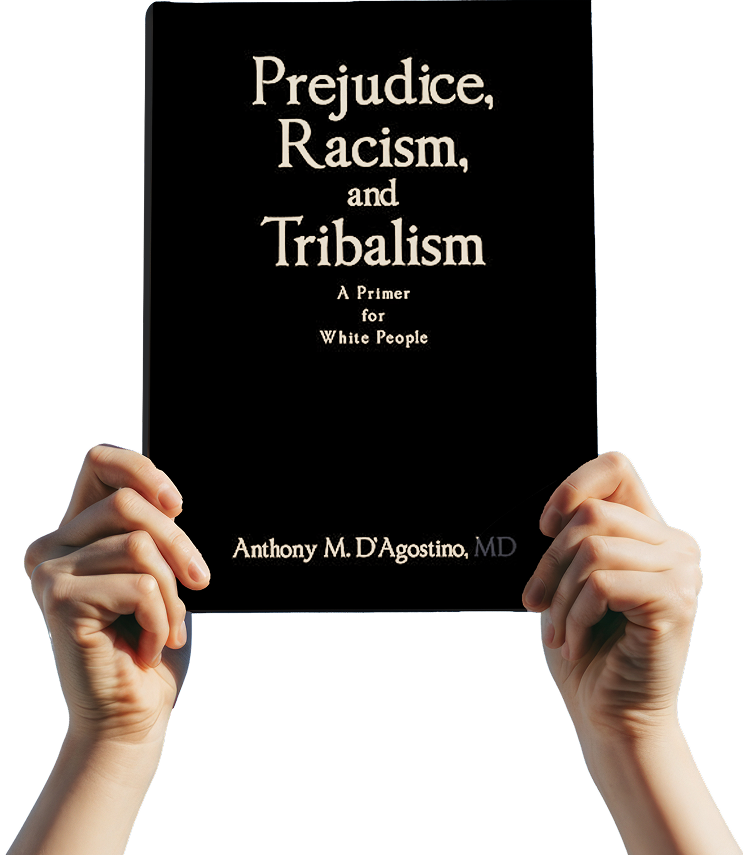
Prejudice, Racism, and Tribalism is a thoughtful primer designed to explore where bias begins and how it shapes our world.
Prejudice, Racism, and Tribalism explores how bias forms, how it spreads, and how it shapes our thinking and behavior.
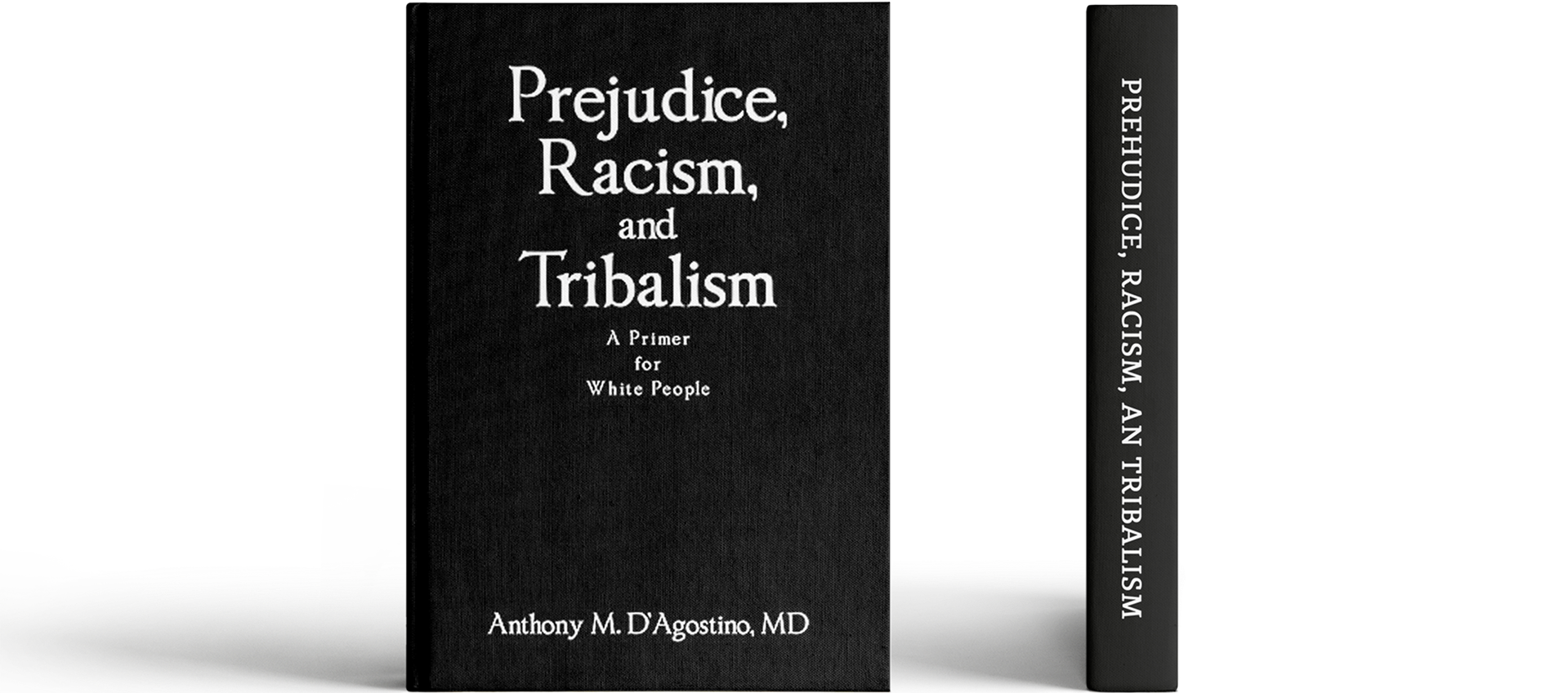
This book is the author’s way of exploring these issues, one at a time. Prejudice, racism, and tribalism are, in a sense, variations on a theme. All people harbor prejudices. Racial prejudices are only one form among many. Raise someone in a racially non-homogeneous society, and similar prejudices are likely to appear. Tribal prejudices are so universal that they probably point to some biological imperative.
What is racism? Is it just one of those things that we know when we see it, or is there value in defining it more precisely? Are all White people racists? Whose definition of critical race theory and/or the so-called great replacement theory do you like?

Order your copy today and join thousands of white Americans confronting uncomfortable truths about race, history, and privilege. Available in paperback and Kindle formats.
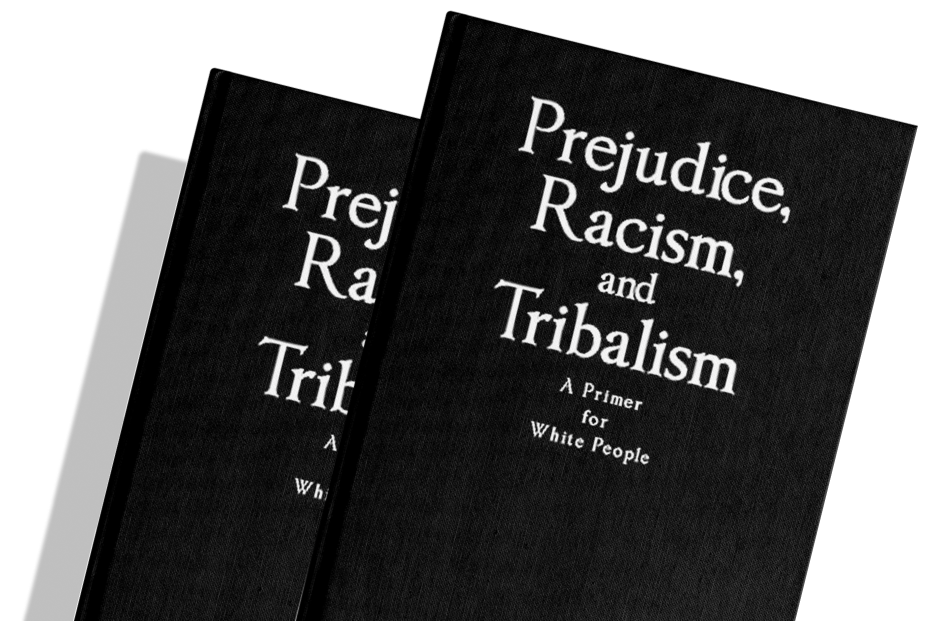
A psychiatrist who spent decades studying human behavior—and his own biases.

Anthony M. D’Agostino, M.D., earned his medical degree from the University Of Illinois College Of Medicine (Chicago). He completed his residency training in psychiatry at the University of Illinois, Chicago; University of California, Los Angeles, and University of Wisconsin, Madison. He is a distinguished fellow of the American Psychiatric Association and was Chairman of Psychiatry at Alexian Brothers Medical Center, Elk Grove Village, Illinois and Chief Medical Officer, Alexian Brothers Behavioral Health Hospital, Hoffman Estates, Illinois, from 1979-2011. He continues in psychiatric practice at Alexian Brothers at time of publication.
Weekly conversations that go deeper into the themes of the book—exploring how bias shapes our politics, our communities, and ourselves.
Weekly episodes diving into the history, psychology, and politics of prejudice. No sugarcoating. No easy answers. Just honest exploration of why we’re still fighting the same battles.
Get updates on new podcast episodes, speaking engagements, and ongoing conversations about race, bias, and American history.
From the first word to the final page, our writers, editors, and publishers work with you to build stories that readers remember.
I read a lot of nonfiction in this space as part of my work. Most books on race in America fall into one of two traps: they preach to the already converted, or they soften the argument so much that nothing useful survives. D'Agostino does neither. Prejudice, Racism, and Tribalism is written by a retired psychiatrist who is white, Catholic, and Midwestern, and who is entirely clear about what that means for his blind spots. That self-awareness is not a disclaimer. It is the methodology. D'Agostino approaches the subject the way a good clinician approaches a difficult diagnosis: with curiosity, with humility about what he does not know, and with a commitment to precision in how he uses language. The central contribution of this book is the distinction between three terms that most people use interchangeably. Prejudice is human and universal. Tribalism is biological and ancient. Racism is structural and specific to systems of power. D'Agostino argues, and argues well, that conflating these three things does not advance the conversation. It shuts it down. Readers who have spent years uncomfortable with how these terms get thrown around will find this framework clarifying in a way that nothing else has been. The psychiatric training shows throughout, and it is the book's greatest strength. D'Agostino understands how childhood, family language, and culture wire us for bias before we are old enough to question any of it. He does not use that knowledge to excuse prejudice. He uses it to explain how deeply it is embedded, which is a very different thing. The chapter on how unconscious bias operates in medicine is one of the sharpest pieces of professional self-examination I have read from any physician. This is not an academic text and it does not pretend to be. Some readers may want more data, more footnotes, more cross-cultural comparison. That is a fair observation. But the book is not trying to be a sociology dissertation. It is trying to start an honest conversation with people who have been unable to have one, and on those terms it succeeds completely. The writing is warm, direct, and genuinely curious. It reads like a very smart man working something out in real time, which is exactly what it is. From a publishing standpoint the ratings are small in volume but the quality of the reader response is exceptional. People are not just reviewing a book. They are describing specific moments where a single sentence changed how they see something. That kind of reaction does not come from competent writing. It comes from honest writing, and D'Agostino has that quality in abundance. If you are a white reader who has avoided this conversation because every entry point felt like an ambush, this is the book you have been waiting for. And if you are not white, this is the book worth putting into the hands of the people in your life who need it most.
Anthony D'Agostino's Prejudice, Racism, and Tribalism is one of those rare books that challenges readers without alienating them. Rather than lecturing or assigning blame, the author invites readers into an honest examination of how prejudice, fear, and tribal thinking have shaped societies throughout history and continue to influence modern America. What impressed me most was the book's balanced approach. D'Agostino combines personal experiences, historical context, and thoughtful questions that encourage self-reflection. He doesn't ask readers to feel guilty about the past; instead, he encourages them to understand it so they can better navigate the present. The discussion of how fear and division can be used for political and economic gain was particularly insightful. The writing is accessible and engaging, making complex topics easier to understand without oversimplifying them. I appreciated that the author explored racism as part of a broader human tendency toward tribalism, showing how these patterns have appeared across cultures and civilizations throughout history. Perhaps the book's greatest strength is its emphasis on introspection. The recurring question—"What would I have done?"—forces readers to confront their assumptions and consider how they might have responded in different historical circumstances. It's a powerful exercise that makes the book feel personal rather than purely academic. Whether you agree with every point or not, this book provides valuable historical perspective and encourages meaningful self-examination. It's a thoughtful, well-researched primer for anyone interested in understanding the roots of prejudice, racism, and social division in today's world.
Great book. Highly recommended.
D’Agostino wants to clear the air by distinguishing between racism, which he defines as a systemic power structure that privileges Whites and disadvantages Blacks, from prejudices and tribal allegiances, which he sees as endemic in every society and, though often hurtful, not supported by embedded established interests and thus not as harmful.
Using himself as an example, the author, a psychiatrist and long-time Republican, emphasizes the importance of culture on self-definition along with the ever presence of self-interest in decision making. At the same time, he contends that corporate and Republican interests have learned how to entrench and enrich themselves (pharmaceutical companies and MAGA Republicans being prime examples) by twisting language and playing the race card to skew policy debate, thus tricking Whites into thinking that their economic interests are opposed to Blacks and aligned with corporate profits.
An extra benefit is the author’s uniquely engaging voice—approachable, forthright, and historically informed. This is a one of a kind book.
I really liked that the author included a lot about his own personal experiences living with these factors; I think this helps the reader put the book in perspective. I also loved the abundance of statistics
I found this book to be deeply engaging, clearly articulated and thoughtfully presented. Dr. D'Agostino writes with great care and clarity. The book begins by simply defining terms, and patiently untangles several complicated and overlapping concepts. Once he has defined these central ideas, Dr. D'Agosotino spends the rest of the book explaining how differentiating between prejudice, racism and tribalism makes it possible for us to more clearly understand our current cultural moment. His self-awareness and ability to soberly assess his own natural and learned and prejudices is refreshing and makes it clear that this book's purpose is not to preach at others, but to make sense of the world for himself as much as for his readers.
I appreciated the way this book engages with global and U.S. History. I never had the feeling that the author was cherry-picking examples to support a pre-drawn conclusion. Instead, with every chapter, he traces our modern ideas of justice and identity back to their biological and historical roots. There is no sense that the author is promoting any party or idealology. Instead, he invites the reader to join him in honest self-appraisal, through a historical and sociological lens.
I found the distinctions between the three title concepts, (Prejudice, Racism, Tribalism) to be a genuinely helpful way of sorting through many current political debates. While Dr. D'Agostino does not offer any easy solutions, he does set an example through his honest reflections on his own prejudices, and his assessment of the self-interest that motivates all people. If identifying the cancer of systemic racism is a step towards ending it, then this book presents an excellent path.
My overall take on the book is that I absolutely love it, 5 stars and I will re-read this book because it is so dense with knowledge, wisdom and experience. The book is like a beautiful masterpiece of art with interwoven fascinating historical facts and events. The historical references help further grab the attention of the reader as it's contextualized with life experiences and perspectives from the writer's magnificent mind himself. It is by far a book for the ages.